A Life of Music, Kindness and a Whole Lot of Sparkle
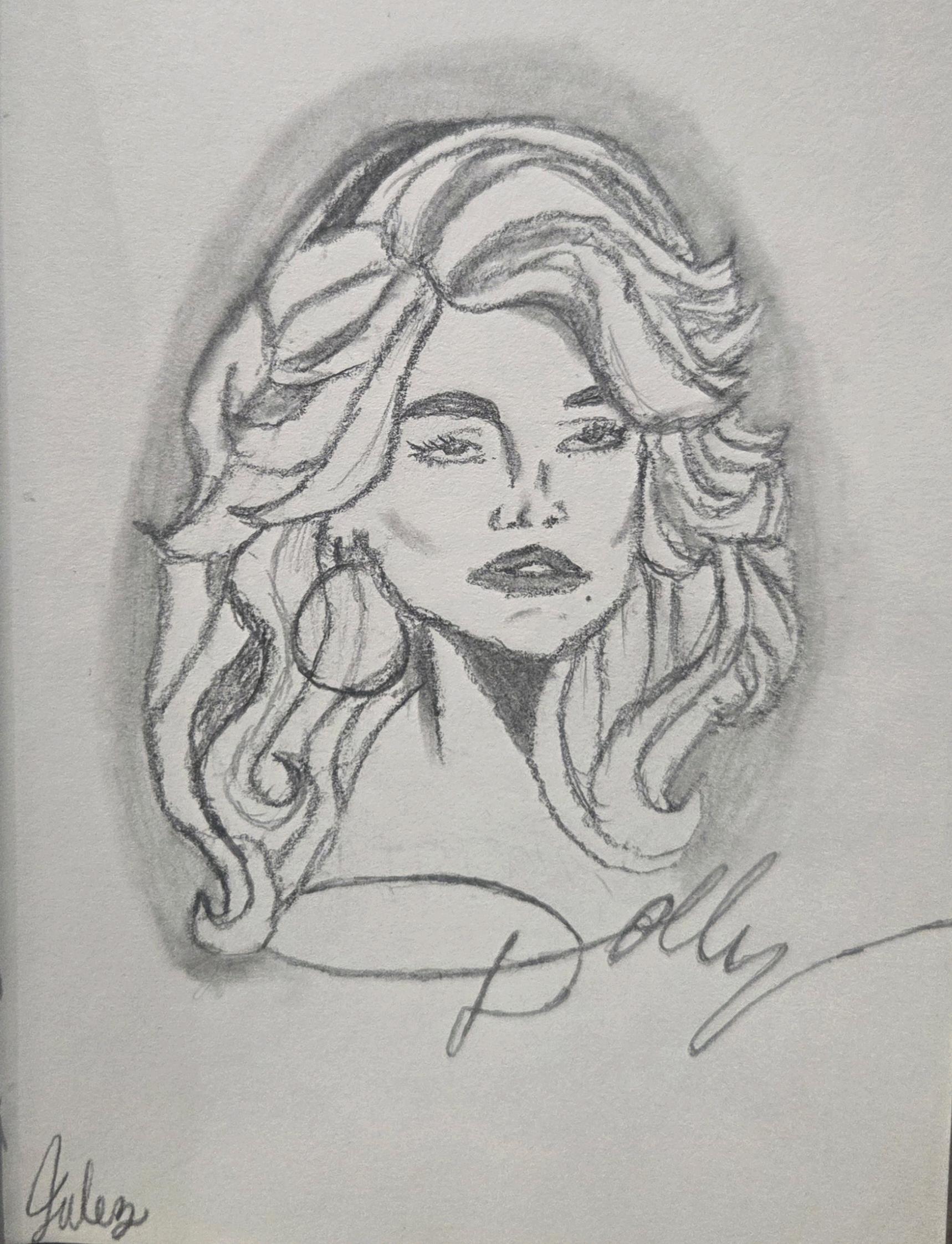
Dolly Parton has passed away.
Those are words I never wanted to type, but I suppose that is the bittersweet deal we make with the people who become larger than life. Even our biggest stars and brightest lights eventually leave us. And when they do, we get the privilege of remembering them, telling their stories, singing their songs and making sure all the good they put into the world doesn’t disappear with them.
And when it comes to one of our greatest and certainly one of our shiniest, Dolly Parton, I don’t think we have to worry about her being forgotten.
Dolly Rebecca Parton was born January 19, 1946, in the mountains of East Tennessee, one of 12 children raised in a small cabin in Sevier County. The Partons didn’t have much money. Dolly never tried to rewrite that part of her story once she became famous, either. She talked about it, laughed about it and wrote about it.
What her family lacked in money, they made up for in faith, music, storytelling and love. Those things followed Dolly for the rest of her life.
Long before the rhinestones, the towering blonde hair and the sold-out shows, there was a little girl in the Tennessee mountains with a huge dream. And boy, did she dream big.
Dolly began writing songs as a child. By 10, she was performing on local television. As a young teenager, she made her first record and appeared at the Grand Ole Opry. Then, after graduating high school in 1964, she packed her bags and headed for Nashville.
She wasn’t going there to figure out what she wanted to do.
She already knew.
Her debut album, Hello, I’m Dolly, arrived in 1967, and from there began a career that would eventually become almost impossible to sum up.
Because how exactly do you sum up Dolly Parton?
You could start with the songs.
There was the pleading desperation of “Jolene.” The childhood story woven into “Coat of Many Colors.” The working-woman frustration and fun of “9 to 5.” And then there was “I Will Always Love You.”
Dolly originally wrote the song as a goodbye to Porter Wagoner when she decided it was time to leave their professional partnership and go out on her own. Her recording went to No. 1 on the country chart twice. Years later, Whitney Houston took Dolly’s words and turned them into one of the biggest recordings in music history.
But before the huge vocals, the movie soundtrack and the worldwide phenomenon, it was simply Dolly writing about something difficult in the way Dolly knew how.
That was her gift.
She could take heartbreak, poverty, ambition, insecurity, love, faith or just the messy business of being human and turn it into a few minutes of music that made you think, Yeah. She gets it.
And millions of people felt that way.
More Than Country Music
Eventually, country music couldn’t contain Dolly Parton.
She crossed over into pop music and then Hollywood, starring in movies like 9 to 5, The Best Little Whorehouse in Texas, Steel Magnolias and Straight Talk. She became a businesswoman, an author, a theme park owner and one of the most recognizable people in the world.
She sold more than 100 million records. Twenty-five of her singles reached No. 1 on the country charts. She won Grammys, Emmys and just about every kind of honor an entertainer could hope to receive.
Generations of people who weren’t even born when “Jolene” came out still know every word.
But I’ve never thought a list of awards was the best way to explain Dolly Parton.
Because some of the most important things she did had nothing to do with a stage.
Maybe Dolly’s greatest accomplishment wasn’t everything she collected during her life.
Maybe it was everything she gave away.
The Legacy Beyond the Music
Dolly never forgot the mountains that raised her.
She established the Dollywood Foundation in 1988 with the goal of helping children in her home of Sevier County, Tennessee. One of its early projects, the Buddy Program, encouraged middle-school students to stick together and stay in school, offering money to students who followed through and graduated.
But one of Dolly’s most beautiful ideas was still to come.
Her father, Robert Lee Parton, was one of the smartest people she knew, but he never had the opportunity to learn to read and write. Dolly saw what that meant for him, and it stayed with her.
So in 1995, she started Dolly Parton’s Imagination Library.
The idea wasn’t complicated.
Give kids books.
Put a book in a child’s hands every month, starting at birth and continuing until they turn five. Give them something that’s theirs. Give them stories. Give them the chance to fall in love with reading before they ever walk into a kindergarten classroom.
It started in her home county.
Then it grew.
And grew.
Eventually, children far beyond Tennessee, and far beyond the United States, were opening their mailboxes every month to find a book addressed especially to them.
In 2018, Dolly donated the Imagination Library’s 100 millionth book to the Library of Congress.
And the books just kept coming.
There is something almost poetic about that part of her legacy.
Dolly Parton made her fortune with words. Then she spent part of that fortune making sure children could learn to read them.
A Heart as Big as Her Hair
And the books were only part of it.
Dolly gave to hospitals, children’s programs, cancer research, disaster relief and countless other causes over the years.
She helped support a hospital and cancer center in Sevierville named for Dr. Robert F. Thomas, the physician who delivered her into the world. She donated to children’s hospitals in Tennessee. When wildfires devastated the Great Smoky Mountains region in 2016, Dolly didn’t just send thoughts and prayers back home. She created the My People Fund, which put money directly into the hands of families who had lost their homes.
Then, in 2020, she donated $1 million to Vanderbilt University Medical Center for COVID-19 research, funding that helped support work connected to the Moderna vaccine.
That’s the thing about Dolly.
She never forgot where she came from.
For someone who spent her life covered in rhinestones, she had a remarkable ability to see what actually mattered.
Maybe that’s part of why people loved her in a way that went beyond simply being fans.
She was glamorous and never pretended she hadn’t grown up poor. She became enormously wealthy and successful without acting like that made her better than anybody else. She could make herself the punchline before anybody else got the chance.
She knew people saw the blonde wigs, the nails, the heels, the curves and the rhinestones.
That was fine with her.
Underneath all of it was a woman who knew exactly what she was doing.
Dolly was a brilliant songwriter, a sharp businesswoman and a remarkably generous human being. She built an image so over-the-top that nobody else could possibly pull it off, and somehow it never felt fake.
Maybe because Dolly never seemed interested in being anyone other than Dolly.
I Will Always Love You
On August 25, 2026, Dolly Parton died at the age of 80.
And somehow, even at 80, it feels too soon.
It feels strange putting an ending on the story of someone who seemed like she would simply always be here.
For decades, Dolly was just… there.
She was on country radio. She was in movies. She was at Dollywood. She was at award shows, usually delivering one of the funniest lines of the night. She was on Christmas albums and television specials. She was there when communities needed help.
And every month, she was there in the mailbox of some little kid waiting for a new book.
The wonderful thing is, she’s still going to be there.
Tomorrow, somebody will hear “Jolene” for the first time.
Somebody will watch 9 to 5.
Some little girl will hear “Coat of Many Colors” and recognize something from her own family in Dolly’s.
Somebody will absolutely belt Whitney Houston’s version of “I Will Always Love You” in their car without knowing that those words began with a young woman from the Tennessee mountains trying to say goodbye to someone she cared about.
And somewhere, a child will open the mailbox and pull out a book with their name on it because Dolly Parton decided more than 30 years ago that every child deserved the chance to fall in love with reading.
That’s a pretty good kind of immortality.
There will never be another Dolly Parton.
There will be other country stars. Other incredible songwriters. Other movie stars and successful businesswomen and generous philanthropists.
But there will never be that exact combination again.
The Appalachian storyteller. The comedian. The songwriter. The businesswoman. The actress. The humanitarian. The little girl with a huge dream who grew up to become a rhinestone-covered force of nature.
She showed generations of people that you could come from almost nothing and still dream enormously.
That femininity and strength were never opposites.
That you didn’t have to make yourself smaller to be taken seriously.
That being kind didn’t mean being weak.
And maybe most importantly, that making it to the top means a whole lot more when you reach back down and help somebody else climb.
Dolly Parton spent 80 years on this earth, and somehow she managed to leave it brighter, funnier, kinder and considerably more sparkly than she found it.
So today, country music feels a little quieter.
The Smoky Mountains feel a little different.
And the world has lost one of its brightest lights.
But Dolly already gave us the perfect words for saying goodbye.
We will always love you, Dolly.
Thank you for the songs.
Thank you for the stories.
Thank you for making us laugh.
Thank you for the books, the generosity, the big hair and all those rhinestones.
Thank you for showing a whole lot of people that where you start doesn’t have to decide where you finish.
And thank you for reminding us that no matter how successful you become, there’s always room to do a little more good.
Rest easy, Dolly.
Your coat may have been made of many colors, but the life you stitched together was truly one of a kind.
–Julez