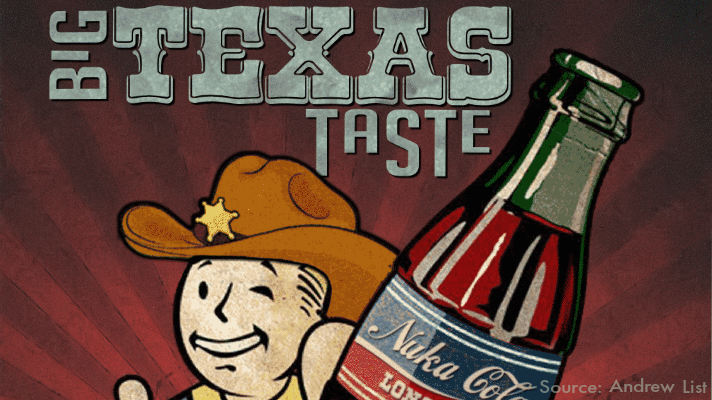
Fallout: Texas?

While New Orleans and a return to Nevada have been heavily favored for the next fallout location, The best answer might have been right in front of our faces the entire time.

Since its inception, the Fallout series has transported players to post-apocalyptic landscapes ripe with adventure, danger, and intrigue. From the desolate wastelands of California to the urban ruins of Washington D.C., each installment has offered a unique setting teeming with stories to uncover. As fans eagerly anticipate the next chapter in this beloved franchise, one question looms large: Where will the next Fallout game take place? Among the myriad of potential locations, there’s one standout candidate deserving of exploration: the Lone Star State itself, Texas. Texas boasts a diverse landscape that can provide players with varied environments to explore. From sprawling deserts to dense pine forests, from bustling cities to isolated towns, Texas offers a wealth of settings ripe for post-apocalyptic storytelling. The contrast between urban decay and rural wilderness could create a rich tapestry of locales for players to traverse.

Texas is steeped in history and culture, offering a unique backdrop for storytelling. Its iconic imagery, from cowboy culture to oil fields, could be seamlessly integrated into the Fallout universe, providing a fresh aesthetic for players to immerse themselves in. The fusion of Texas lore with Fallout’s retro-futuristic style could yield a compelling and distinctive setting. With a storied past, including its own struggles and conflicts, which could serve as fertile ground for narrative exploration. From the days of the Wild West to its role in the oil industry, Texas has experienced moments of triumph and tragedy that could be reimagined in the Fallout universe. Delving into the state’s history could provide players with a deeper understanding of the world they inhabit.

No discussion of Texas would be complete without mentioning the Alamo, one of the state’s most iconic landmarks. This historic site holds immense cultural significance, symbolizing resilience and sacrifice. In a post-apocalyptic Texas, the Alamo could serve as a central hub or pivotal location within the game world.

Imagine the crumbling walls of the Alamo fortified by survivors, its grounds transformed into a bustling settlement teeming with activity. Players could interact with a diverse cast of characters, each with their own stories and motivations. The Alamo’s historical significance could be woven into the game’s narrative, offering players quests and challenges that pay homage to its storied past.

Furthermore, the Alamo’s strategic location could make it a sought-after prize for rival factions vying for control of the region. Players may find themselves drawn into conflicts over the Alamo, forced to defend it from raiders or make difficult decisions that shape its fate. The juxtaposition of the Alamo’s historical legacy with the harsh realities of the post-apocalyptic world could provide a compelling backdrop for the game’s storyline.

Whether it’s delving into the Alamo’s underground tunnels in search of lost artifacts or uncovering the truth behind the myths that surround it, the Alamo could provide players with countless hours of adventure and intrigue. Its status as a cultural touchstone would make it a memorable and impactful location within the game, leaving a lasting impression on players long after they’ve moved on to other quests.

Incorporating the Alamo into the next Fallout game would not only pay homage to Texas history but also add depth and richness to the game world. It would provide players with a captivating setting to explore, complete with its own unique challenges and mysteries. From its iconic architecture to its legendary status, the Alamo has the potential to elevate the next Fallout game to new heights, ensuring that the Lone Star State leaves an indelible mark on the franchise’s legacy.

While other locations within the Fallout universe have been explored in previous games, Texas remains largely uncharted territory. This presents an exciting opportunity for developers to introduce new lore, creatures, and gameplay mechanics unique to the region. By venturing into unfamiliar territory, the next Fallout game can captivate players with fresh discoveries and surprises around every corner.

Texas represents a compelling setting for the next installment in the Fallout series. Its diverse terrain, cultural significance, rich history, and untapped potential offer developers a wealth of opportunities to craft an unforgettable gaming experience. As fans eagerly await news of the next Fallout game, the prospect of exploring the wastelands of Texas is sure to ignite excitement and anticipation. So saddle up, wasteland wanderers, because the Lone Star State awaits your adventure.

Mormons: Religion or Cult?

Seemingly of all the religious sects, One has been on the cult borderline more so than not.

Distinguishing between a cult and a religion is not always straightforward, and it can be a complex and contentious matter. The classification of a group as a cult or a religion often depends on perspective, context, and the criteria applied. Generally, several factors can help differentiate the two, but it’s important to note that these factors are not universally agreed upon, and there can be exceptions. Here are some distinctions that are commonly considered:

Belief System: Religions typically have established, widely accepted belief systems and doctrines that are often based on ancient scriptures or traditions. Cults, on the other hand, may have novel or unorthodox beliefs that deviate significantly from mainstream religious teachings.

Leadership Structure: Religions tend to have hierarchical leadership structures with established clergy and religious authorities. In contrast, cults may have a more centralized, authoritarian leadership structure that places significant power in the hands of a single leader or a small group of leaders.

Size and Influence: Religions are usually larger and more influential in terms of membership, history, and societal impact. Cults tend to be smaller, more insular, and less established within society.

Transparency: Religions tend to be more transparent in their beliefs and practices, making their teachings and rituals available to the public. Some cults may maintain secrecy and restrict access to their teachings and practices.

Social Integration: Religions are typically integrated into society, often with places of worship, established rituals, and a presence in communities. Cults may isolate their members from mainstream society or discourage interaction with non-members.

Longevity: Religions tend to have a longer history, often spanning centuries or even millennia. Cults are often newer and may be founded by a charismatic leader or in response to a specific event or idea.

Control and Coercion: Cults may exert tight control over their members, dictating aspects of their lives, including relationships, finances, and personal choices. This control can be less pronounced or nonexistent in established religions.

Purpose: Cults may often be perceived as having a primarily self-serving or exploitative purpose, such as financial gain or the gratification of the leader’s desires, while religions often have broader spiritual, moral, or social goals.

It’s important to approach this topic with sensitivity and an awareness that the term “cult” can carry a pejorative connotation. Labeling a group as a cult can be stigmatizing, and it may be more productive to engage in objective analysis of a group’s beliefs, practices, and impact on its members and society.

The perception that some people think Mormons are a cult stems from a combination of factors, including misunderstandings, historical context, and theological differences. It’s important to note that such views are not universally held, and many people do not consider Mormons (members of The Church of Jesus Christ of Latter-day Saints, or LDS Church) to be a cult.

Here are some reasons why some individuals might view Mormons as a cult:

Unconventional Beliefs: The LDS Church has unique beliefs and practices that differ from mainstream Christianity. These include beliefs in additional sacred texts like the Book of Mormon, the Doctrine and Covenants, and the Pearl of Great Price, as well as distinct doctrines about the nature of God, the pre-existence of souls, and the potential for human deification. Some people may label these beliefs as unorthodox or cult-like because they deviate from traditional Christian teachings.

Secrecy: The LDS Church has historically been perceived as secretive, with certain rituals and ceremonies, such as temple ordinances, being kept confidential from non-members. This secrecy can lead some outsiders to view the church with suspicion, associating it with cult-like practices.

Isolation: Historically, some Mormon communities practiced a form of isolationism, particularly during the early years of the church’s history. This isolationism, combined with communal living arrangements like those in Utah’s early settlements, contributed to the perception of a close-knit, secretive group that some labeled as a cult.

Historical Persecution: The early history of the LDS Church is marked by persecution and suspicion, especially during the 19th century in the United States. The church’s founder, Joseph Smith, was killed by a mob, and Mormons faced violence and discrimination in various places. This persecution may have contributed to the negative perception of the church.

Terminology: The use of certain terms and titles within the LDS Church, such as “prophet” and “apostle,” which have specific meanings within Mormonism, can seem unusual or cult-like to outsiders unfamiliar with Mormon theology.

Furthermore, religious freedom and the right to practice one’s beliefs are fundamental principles in many societies, so it’s crucial to respect the rights of individuals to choose their religious affiliations, even if those affiliations differ from mainstream beliefs.