The Complete Up To Date Epstein Documents

The following are the full documents that have been released to public records so far.


The purpose of the following is to provide complete transparency and public access to the release of the Epstein documents. This is NOT a political piece or commentary. It is NOT intended to draw conclusions or make assumptions about any real-life events beyond what has been officially documented. The validity of these materials can only be confirmed through the official sources that have published them. We are not making any additional accusations, implications, or rhetoric. The sole purpose of this post is to provide clarity, transparency, and information.


Why Don’t People Spontaneously Combust Anymore?

Ever notice how no one talks about “Spontaneous Combustion” anymore?

In the latter part of the 20th century, reports of spontaneous human combustion (SHC) captured the public’s imagination, igniting fear and fascination alike. Stories of individuals mysteriously bursting into flames without any external ignition source circulated widely, prompting intense speculation and debate. However, as we step into the 21st century, such occurrences seem to have faded into obscurity. What led to this shift, and what does it reveal about our understanding of science and human nature?

During the 1990s, accounts of SHC proliferated in the media, often sensationalized and embellished for dramatic effect. Tales of individuals seemingly engulfed in flames from within, leaving behind nothing but ashes and charred surroundings, captured headlines and fueled urban legends. These reports typically described victims who burned with intense heat, yet nearby objects remained unscathed—a puzzling anomaly that added to the mystery.

But as scientific scrutiny intensified, doubts began to emerge regarding the veracity of these claims. Skeptics pointed to the lack of concrete evidence supporting the existence of SHC as a genuine phenomenon. Instead, they proposed alternative explanations, ranging from accidental fires caused by dropped cigarettes to the wicking effect of human fat aiding in the combustion process.

Advancements in forensic science and fire investigation further undermined the credibility of SHC. Detailed examinations of alleged cases revealed a common thread: the presence of external heat sources or combustible materials in close proximity to the victims. In many instances, underlying medical conditions such as alcoholism or obesity were identified as contributing factors, increasing the individual’s susceptibility to accidental fires.

Moreover, the decline of SHC reports coincided with the proliferation of digital media and instant communication platforms. As information became more accessible and widely disseminated, the spread of unsubstantiated claims became increasingly scrutinized. Debunking myths and pseudoscientific phenomena became a focal point for online communities and skeptical organizations, relegating SHC to the realm of folklore rather than scientific inquiry.

In the absence of credible evidence, the concept of spontaneous human combustion has largely faded from public consciousness. While occasional reports may still surface, they are met with skepticism and rational scrutiny rather than sensationalism. The shift away from SHC as a credible phenomenon reflects our evolving understanding of science and the importance of critical thinking in evaluating extraordinary claims.

As we look back on the era of SHC hysteria in the 1990s, it serves as a cautionary tale about the dangers of misinformation and the power of scientific inquiry to dispel myths. While the allure of the unexplained may continue to captivate our imagination, it is through rigorous investigation and empirical evidence that we gain a deeper understanding of the world around us, leaving the mystery of spontaneous human combustion to smolder in the annals of history.

The Science Behind The Mandela Effect

Stephen Hawking, The God Particle, CERN, and The End of The World.

The Mandela Effect has become one of the fastest-growing conspiracy theories of the past two decades. This is largely because a hefty number of the population may be subjected to this phenomenon long before learning about what this theory entails.

For those unfamiliar with The Mandela Effect, the theory was birthed in 2013 following the death of South African political activist Nelson Mandela as many seemed to recall learning about his passing decades prior while serving a jail sentence. The phenomenon focuses around what some would go on to deem “mass Misremebering” or “falsified memories”. Events, names, brands, and even people fall under the Mandela Effect despite those affected knowing without a doubt what they recall to be true. Infamous examples include The Berenstain Bears children’s books being spelled “Berenstein bears”, Curious George seemingly missing his tail, “Sex In The City” having always actually been “Sex AND The City” and many, many, more. but for the longest time the ongoing questions remain, Why? and more importantly How? does this happen.

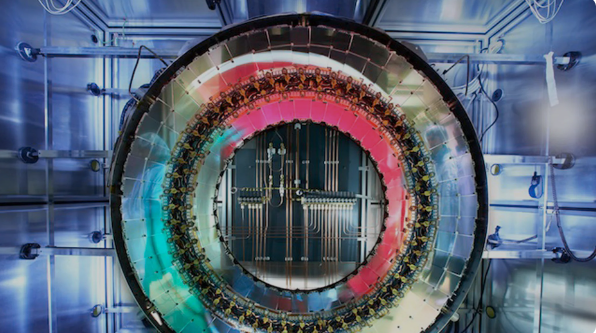
To find the answers to The Mandela Effect we must travel back to 2012 and the discovery of the Higgs Boson Particle, also known as “The God Particle”. In a preface to his book, ‘Starmus”, Stephen Hawking explained how the discovery of The God Particle could alter time and reality as we know it, “This could mean that the universe could undergo catastrophic vacuum decay, with a bubble of the true vacuum expanding at the speed of light. This could happen at any time and we wouldn’t see it coming.” In 2012, CERN or Conseil Européen pour la Recherche Nucléaire” (The European Council for Nuclear Research) discovered that very particle, The Higgs Boson Particle. For those unaware CERN has been the center of many reality-altering controversies as their high security, small public interaction, and their consistent use of such instruments as their Hadron collider to manipulate atomic structures and molecular grade research leave the rest of us to wonder what really goes on behind the CERN walls.

With the CERN discovery of Higgs Boson in 2012 along with their track record of atomic experimentation, is it unrealistic to believe that Stephen Hawking, the man credited by many as the smartest mind of our time, foresaw exactly what would happen? if CERN began experimentation with Higgs Boson is in unrealistic to believe this may have actually warped us into a mirror or multiversal dimension as theorized by Hawking? In addition to the scientific aspect alone, as many remember 2012 was deemed to be “The end Of The World” by many based upon the abrupt ending of the Mayan calendar. Is it possible the Mayans then were correct in their timeline? Was 2012 actually about to bring us the end of the earth as we know it, or more importantly, was it a credible enough argument for CERN to deem it reason enough to begin experimentation with the Higgs boson particle?

In theory, if this were to be true and CERNs experimentation with Higgs Boson warped our reality, sending us into an alternate timeline and/or dimension could these so-called “residuals” of the Mandela Effect (I.E. Sex IN the City mentions, C3-P0 images without his sliver leg, TV guides listing the BearstEin) actually be correct for the timeline we came from, but just not correct to the rest of the universe in this current timeline? As we know in just 12 months’ time The Mandela Effect would come to be, but was this just the first time since 2012 a widely known public figure brought attention to these inconsistencies in mass. Perhaps in 2012, you noticed the changed spelling of Fabreze from Frabreeze and either wrote it off as rebranding or you yourself never read the product correctly, when in actuality you had been affected by the Mandela effect prior to the 2013 death of Mandela himself. In addition to theorizing, a Reddit user claiming to be a CERN scientist claimed to have “created” the Mandela effect after experimentation with The Higgs Boson in 2012. While we have to take this account with a grain of salt as to whether or not his credentials are accurate there are certainly some credible questions to be asked.

A more detailed explanation of this theory linking 2012, CERN, and the creation of The Mandela Effect can be heard below during a live radio broadcast of The Rebel Radio Show on CBW Radio from Monday, October 23rd, 2023. The episode breaks down “the end of the world” as we’ve been told through the years before diving into this theory in detail pinning The Mandela Effect on 2012 as well as accounts of “time travel researchers”, CERN practices to be questioned, and The explanation of accelerated time passage.

An Interview With a 30-year Scientologist (Audio)

Style got the chance to sit down over the phone and talk to an ex-Scientologist of 30 Years

Tim is a former Scientologist who practiced for 30 years, Achieved a level OT5 in the church, and even took numerous leader and membership courses over a wide variety of areas. Ahead of the 10/09/23 broadcast of The Rebel Radio Show which showcased the conspiracies surrounding Scientology and The Roman Catholic Church respectively, Style got the chance to sit down and interview Tim via phonecall about his time in the Church of Scientology as well as some of the mass beliefs about the organization. The Interview can be heard in full below.

Mormons: Religion or Cult?

Seemingly of all the religious sects, One has been on the cult borderline more so than not.

Distinguishing between a cult and a religion is not always straightforward, and it can be a complex and contentious matter. The classification of a group as a cult or a religion often depends on perspective, context, and the criteria applied. Generally, several factors can help differentiate the two, but it’s important to note that these factors are not universally agreed upon, and there can be exceptions. Here are some distinctions that are commonly considered:

Belief System: Religions typically have established, widely accepted belief systems and doctrines that are often based on ancient scriptures or traditions. Cults, on the other hand, may have novel or unorthodox beliefs that deviate significantly from mainstream religious teachings.

Leadership Structure: Religions tend to have hierarchical leadership structures with established clergy and religious authorities. In contrast, cults may have a more centralized, authoritarian leadership structure that places significant power in the hands of a single leader or a small group of leaders.

Size and Influence: Religions are usually larger and more influential in terms of membership, history, and societal impact. Cults tend to be smaller, more insular, and less established within society.

Transparency: Religions tend to be more transparent in their beliefs and practices, making their teachings and rituals available to the public. Some cults may maintain secrecy and restrict access to their teachings and practices.

Social Integration: Religions are typically integrated into society, often with places of worship, established rituals, and a presence in communities. Cults may isolate their members from mainstream society or discourage interaction with non-members.

Longevity: Religions tend to have a longer history, often spanning centuries or even millennia. Cults are often newer and may be founded by a charismatic leader or in response to a specific event or idea.

Control and Coercion: Cults may exert tight control over their members, dictating aspects of their lives, including relationships, finances, and personal choices. This control can be less pronounced or nonexistent in established religions.

Purpose: Cults may often be perceived as having a primarily self-serving or exploitative purpose, such as financial gain or the gratification of the leader’s desires, while religions often have broader spiritual, moral, or social goals.

It’s important to approach this topic with sensitivity and an awareness that the term “cult” can carry a pejorative connotation. Labeling a group as a cult can be stigmatizing, and it may be more productive to engage in objective analysis of a group’s beliefs, practices, and impact on its members and society.

The perception that some people think Mormons are a cult stems from a combination of factors, including misunderstandings, historical context, and theological differences. It’s important to note that such views are not universally held, and many people do not consider Mormons (members of The Church of Jesus Christ of Latter-day Saints, or LDS Church) to be a cult.

Here are some reasons why some individuals might view Mormons as a cult:

Unconventional Beliefs: The LDS Church has unique beliefs and practices that differ from mainstream Christianity. These include beliefs in additional sacred texts like the Book of Mormon, the Doctrine and Covenants, and the Pearl of Great Price, as well as distinct doctrines about the nature of God, the pre-existence of souls, and the potential for human deification. Some people may label these beliefs as unorthodox or cult-like because they deviate from traditional Christian teachings.

Secrecy: The LDS Church has historically been perceived as secretive, with certain rituals and ceremonies, such as temple ordinances, being kept confidential from non-members. This secrecy can lead some outsiders to view the church with suspicion, associating it with cult-like practices.

Isolation: Historically, some Mormon communities practiced a form of isolationism, particularly during the early years of the church’s history. This isolationism, combined with communal living arrangements like those in Utah’s early settlements, contributed to the perception of a close-knit, secretive group that some labeled as a cult.

Historical Persecution: The early history of the LDS Church is marked by persecution and suspicion, especially during the 19th century in the United States. The church’s founder, Joseph Smith, was killed by a mob, and Mormons faced violence and discrimination in various places. This persecution may have contributed to the negative perception of the church.

Terminology: The use of certain terms and titles within the LDS Church, such as “prophet” and “apostle,” which have specific meanings within Mormonism, can seem unusual or cult-like to outsiders unfamiliar with Mormon theology.

Furthermore, religious freedom and the right to practice one’s beliefs are fundamental principles in many societies, so it’s crucial to respect the rights of individuals to choose their religious affiliations, even if those affiliations differ from mainstream beliefs.

The Rebel Radio Show and Year of October Collab

The Rebel Radio Show will be using Year of October for their October theme song!

Long-time listeners of The Rebel Radio Show will know that since debuting on CBW Radio, the broadcast has been played in by an altered cut of Green Day’s “Shes a Rebel”. Likewise, preceding the live radio show, The classic “suspend the show” track has played host to the into of every Rebel Podcast to date. As we once again approach October, The Rebel Radio show begins to gear up for the highly anticipated month of conspiracies. Three years running, the WSRR team has taken the top suggested conspiracy theories from listeners via the WSRR Discord server and dedicated their weekly show to dive deeper into them.

(Last years’ Missing Flight MH370 episode linked below)

Previous seasons have seen guests in the likes of WMMS’s Corey Rotic, NCX’s Joe Czekaj, and many more as well as listener-submitted voice recordings, voicemails, and interviews. This year Style’s Rebel Radio is pleased to announce a partnership with Nashville band Year of October to use a cut of their track “Wastelands Pt. 2” as the show’s main theme for the month. Year of October are no strangers to CBW Radio being featured on The Rock Revival’s Independent Spotlight as well as in daily rotation alongside promotional spots voiced by the band! The track can be found on Year of October’s album Wastelands which debuted on CBW Radio in April of 2022. (Below)

To learn more about Year of October you can check out this article from Style, or head to their website!

-Article written for StylesRebelRadio.com

What Causes The Mandela Effect

The Mandela Effect

The Mandela Effect, Named after the mass confusion surround the death of Nelson Mandela, is the name given to the phenomenon of the mass remembrances of events that seemingly never happened. The theory began with the aforementioned Nelson Mandela who passed away in 2013 despite a hefty majority of people remembering him dying in an African prison in the 1980s. Since then the community surrounding the Mandela Effect has grown rapidly as more residuals are discovered and more theories arise as to just how this all can possibly be happening. Before we dive into some of those theories, let’s break down some of the most iconic and recent Mandela Effects that may affect you.

The Berenstain Bears

No, you didn’t read that wrong and no, that’s not a typo. The spark that lit the fuse is largely attributed to these childhood storybook bears. Most often remembered as the “Berenstein Bears” even the most detailed search through the archives will show these bears have always been named the “Berenstain Bears”. While some residuals of old TV Guides and VHS tapes have surfaced, no source that can be traced back to the production or company responsible for these books or shows ever show them being spelt with an “e”.

… A box of chocolates

Everybody and their mother is familiar with the cultural classic that is Forest Gump. Even for those who haven’t seen it (Do you exist?) there is one quote from the film that has surpassed pop-culture. Go ahead and say it to yourself, It’s the catchphrase, The Slogan, The repetend line through out the film. Dis you say “Life Is like a box of chocolates”? If so, You’d be wrong. I know what you’re thinking, how could this be can hear Tom Hanks say it plain as day. I urge you to go back and watch that clip on YouTube, listen closely and hear that iconic line… “Life WAS like a box of chocolates”.

Who’s the Fairest of them all?

Yet another pop culture classic, Snow White. Admit it fellas, you know the quite too. Ya know, that famous quote, “Magic Mirror on the Wall, Who’s the fairest of them all?” That’s right, No “Mirror, Mirror” in this reality. One of the absolute most baffling examples as that exact line has been seen quoted in Shrek as well as inspired its own spinoff of the same name. Yet in the Disney animated Snow White film “Mirror, Mirror” is never spoken. Stranger still, seemingly in the other languages the movie is translated in, that line DOES appear. Residual?

Down The Rabbit Hole

There is an ever-growing list of Mandela Effects that seemingly keep getting wilder and wilder. If none of these have made you question this reality, I encourage you to check out the following video on some of the most bazar Mandela Effects.

Youtube: WatchMojo

So How Can This Be?

As of now there are two major theories as the the reasoning behind the Mandela Effect phenomenon.

The Timeline/Paradox Theory

The first theory revolves around the possibility of a paradox involving the timeline we know to be our reality. And yes, before you jump to it, this theory well precedes Loki and the Multiverse. The theory goes that the world (our world that we have perceived in this reality) has actually ended, and not just once. However rather than physically ending the reality we perceive has merged into another reality causing a paradox, one where we retain the memories from our initial reality despite the subtle differences making these non-existent in the current one. Three notable points in history have been linked to this theory as three different points we have merged with three different realities. The First paradox event is said to be Y2K, originally thought to be “The end of the world” Year 0 would wipe all computer based intelligence ability to comprehend the actual year causing a reset. The second paradox shift is though to be the year 2012 when the Mayan Calendar predicted the end of the world. Lastly and most recently is the year 2020 which was considered to be the coming of days due to the unforeseeable and outrageous events the year hosted. While we can look back at these three fixed points as nothing more than hoaxes and false predictions, oddly enough there seems to be a spike in Mandela Effects following each of these years.

Simulated Reality Theory

Simulated Reality theory is the theory that it is very possible and even extremely likely that we currently live inside a computer generated simulation. The crux of the theory relies on the fact it would be next to impossible to answer this question without first being able to create a simulated reality of our own that perfectly mirrored our reality. However by doing so we also run the equal possibility of either creating the first simulated reality or being the last reality to do so. The Mandela Effect comes into play as the response to a “patch” of sorts. While a new reality or update to our current one could easily overwrite the code for a company like “Febreeze” so that the code reads it was actually always spelled “Febreze”, rewriting the code of near sentient, growing AI as a whole would be a lot more challenging. This would lead to peoples “false memories”. Memories of something that actually existed and was witnessed however was overwritten so that it seemingly never existed inside the current reality.

Closing Thoughts

This is just scratching the surface of the Mandela Effect theory. This ever expanding and ever growing phenomenon is one of my favorite things to discuss and monitor. I highly encourage anyone unfamiliar to look into some of the documented effects as I can almost assure you one of them will strike a chord. Let me know what your favorite Mandela Effects are and which ones sent you over the edge below, then be sure to check out more articles like this one right here!

-Style